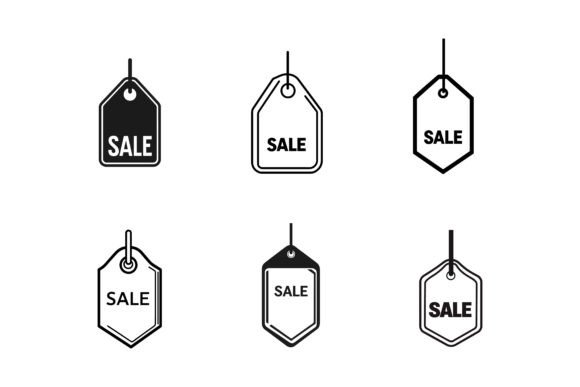
Vector Set of Sketch Discount Tags for Your Projects
Visual communication often hinges on small details that catch the eye and guide attention. A hand-drawn discount tag, a sketch-style promotional badge, or a welcome message rendered in a casual, artistic stroke can shift the tone of an entire layout. The Vector Set of Sketch Discount Tags offers a curated collection of these elements, built to blend seamlessly into both digital and print work. Rather than relying on generic clip art, designers and business owners can work with illustrations that feel intentionally crafted, with the warmth and imperfection that only sketch-based artwork can bring.
What sets a well-structured vector collection apart is not just the artwork itself but how accessible and adaptable it is. When a resource arrives with AI, EPS, and JPG formats included, it immediately removes friction for users on different platforms. Someone working on a Mac in Adobe Illustrator, a Windows user relying on CorelDRAW, or a marketer who simply needs a high-resolution image for a social media graphic can all pull from the same source without conversion headaches. That cross-compatibility may not sound glamorous, but in practice it means fewer late-night troubleshooting sessions and more time spent on the creative work that actually moves a project forward.
What Makes Hand-Drawn Discount Tags Stand Out
Digital design has grown increasingly polished over the years, and while clean vectors have their place, there is a counterbalancing hunger for organic, human touches. Sketch-style artwork carries a sense of immediacy and personality. A discount tag drawn with slightly irregular lines, subtle texture, and an imperfect circle around the price point suggests a boutique shop rather than a faceless corporation. It tells a viewer that there is a real person behind the offer.
For entrepreneurs running online stores, this can be a quiet but meaningful differentiator. When a promotional badge looks like it was sketched by hand, the offer feels more personal. A vector set of sketch discount tags allows that effect to be deployed consistently across product pages, email headers, and printed flyers without hiring an illustrator for each instance. The consistency of a unified set also prevents the visual clutter that arises when a designer pulls mismatched elements from too many sources.
Organized Files That Respect Your Workflow
Anyone who has downloaded a promising illustration pack only to open a chaotic mess of unnamed layers and scattered artboards knows that organization matters. A collection described as having a neat file and layer structure is not just a convenience, it is a professional necessity. When every tag, badge, and welcome message sits on its own clearly labeled layer, modifying one element without disturbing others becomes trivial. You can isolate a single discount tag, copy it, and drop it into a larger composition in moments rather than minutes.
This attention to structure also reduces the learning curve for team members who were not the original file creators. If a freelancer hands off a project to an in-house marketer, that second person should be able to open the file, understand the hierarchy, and make adjustments without reverse-engineering the entire document. The time savings compound across projects and pay dividends in reduced frustration and fewer revision cycles.
Precision in Every Stroke
Consistency across an illustration set is harder to achieve than it looks. When multiple icons and badges need to feel like they belong together, small discrepancies in line weight, corner rounding, or stylistic exaggeration can undermine the cohesion. A collection that emphasizes perfection in details suggests that the creator paid attention to these subtleties. The same stroke width that appears in a circular discount tag carries through to a rectangular welcome badge. The sketch texture feels uniform. The visual language speaks with one voice.
This matters especially in multi-page documents like catalogs, lookbooks, or presentation decks. When a reader flips through pages and encounters discount tags that all feel part of the same family, the impression is one of professionalism and care. The alternative, a jarring mix of styles, can make even a well-written proposal feel amateurish.
Print, Web, Apps, and Infographics: One Resource, Many Applications
The versatility of a vector-based collection is one of its strongest practical advantages. Vector files scale without quality loss, meaning a single discount tag can appear as a small icon on a mobile app button and then blow up to billboard size for a trade show banner without pixelation or blur. This eliminates the need to source separate assets for different output channels.
Consider a small business owner preparing for a seasonal sale. She needs web banners for her Shopify store, print signage for her physical location, a badge for her Instagram stories, and icons for an email campaign. A vector set of sketch discount tags that handles all of these from one file set streamlines her production process dramatically. She can focus on messaging and strategy rather than asset management.
Infographics That Feel Approachable
Data visualization often suffers from a cold, sterile presentation. Adding sketch-style elements, a welcome badge that introduces a section, a hand-drawn arrow pointing to a key statistic, or a discount tag highlighting a special offer within the graphic, can warm the tone considerably. Educators and content creators who build infographics for social sharing may find that these small artistic touches increase engagement because the graphic feels less like a corporate report and more like a human conversation.
Editing Freedom That Adapts to Your Brand
A static asset has limited use, but a vector file that allows color changes, path modifications, and stylistic adjustments becomes a living resource. If a brand palette shifts from warm reds to cool blues, the discount tags can follow suit without losing their sketch character. If a tag shape needs slight elongation to accommodate longer text in a different language, the anchor points can be adjusted directly.
This editing flexibility also supports A/B testing in marketing contexts. A team might test a red discount badge against a green one to see which drives more clicks on a landing page. With a locked raster image, that test requires a redesign. With an editable vector set, it requires a few clicks and a color swatch change. The lowered barrier to experimentation can lead to better marketing outcomes over time.
Who Stands to Gain the Most
Freelance graphic designers working on tight deadlines often build personal libraries of reliable assets they can turn to when a client project requires quick turnaround. A comprehensive set of sketch-style promotional elements can serve as that dependable foundation. Rather than illustrating a discount tag from scratch for every e-commerce client, the designer can start with a professional base and customize details to match the brand identity.
Small business owners who handle their own marketing also benefit considerably. Not every entrepreneur has the budget to hire a designer for each campaign, nor the time to learn advanced illustration techniques. Having a ready-made collection that looks custom-drawn gives them a creative leg up without the corresponding expense. A bakery promoting a weekend special, a boutique announcing a clearance event, or a consultant offering a limited-time package can all create polished promotional materials that feel on-brand and thoughtful.
Bloggers and content creators who sell digital products, run affiliate promotions, or simply want to draw attention to key sections of a post may find the welcome badges particularly useful. A hand-drawn "Hello Welcome" illustration placed at the top of a landing page or newsletter signup section can soften the tone and make a call to action feel less transactional.
Practical Situations Where Sketch Tags Shine
Imagine a marketing manager at a mid-sized retail company planning a multi-channel holiday campaign. The creative team has developed a warm, hand-illustrated look for the season. The manager needs promotional badges that match the aesthetic for the website hero banner, the email header, the in-store display graphics, and the social media countdown posts. Using a vector set of sketch discount tags that aligns with the illustrative direction ensures visual consistency across every touchpoint. The campaign feels unified because the details, line quality, and character of the tags remain constant.
Another scenario involves an educator building course materials. A module on pricing strategies or promotions could benefit from visual aids that explain discount structures. A set of clearly drawn tags showing percentage discounts, dollar-off amounts, and bundle deals can make abstract concepts more tangible for students. Because the files work on both Mac and Windows, the educator can integrate them into presentation software regardless of the operating system their institution uses.
A publisher laying out a community cookbook or a local event program might also find room for these elements. Marking special vendor offers or highlighting early-bird pricing with a hand-sketched badge adds charm that a plain text box cannot replicate. The organic feel of the artwork suits community-focused publications where a neighborly, personal tone is appropriate.
Observations on Fit and When to Consider Alternatives
No single illustration style suits every context. Sketch-based designs convey approachability, creativity, and a human touch. They pair well with brands that emphasize craftsmanship, local connection, handmade goods, or friendly service. A corporate law firm or a high-end luxury brand with a minimalist, ultra-refined identity might find sketch tags at odds with their visual language. In those cases, a cleaner, geometric vector set could be a more natural fit. Readers should evaluate whether the hand-drawn character of this collection aligns with the personality their audience expects.
File compatibility is another consideration. While AI, EPS, and JPG cover a broad range of software, users working exclusively with raster-based programs like older versions of Photoshop should be aware that JPG files are flattened and do not offer the same editing depth as the vector formats. The full power of layer structure and path editing lives in the AI and EPS files, so those who plan to customize heavily will want access to vector editing software.
For teams that need extremely large icon libraries spanning hundreds of unrelated categories, a single focused collection of discount tags and welcome badges may not be comprehensive enough on its own. It works best as a targeted addition to an existing toolkit rather than a one-stop solution for all icon needs.
Integrating the Collection Into Your Creative Process
One effective approach is to import the entire set into a project template. When a designer sets up a new client file with frequently used assets already placed on a reference artboard, the creative process accelerates. The discount tags become as accessible as choosing a font. Over time, small customizations accumulate and the original set evolves into a tailored library that reflects the specific needs of recurring projects.
For those who create content on a regular schedule, batch-customizing several tags at once can save hours over the course of a month. A blogger might adapt five welcome badges to match upcoming seasonal themes in a single sitting, then pull from that prepared pool as posts go live. The upfront time investment pays back through smoother publishing workflows.
Color psychology also deserves a mention. The ability to change tag colors easily means a user can align calls to action with established principles of visual persuasion. A warm orange tag may suggest urgency for a limited-time offer, while a cool teal badge might feel more appropriate for a calm, informational welcome message. Having control over these details without rebuilding assets from scratch puts more creative power in the hands of the person executing the campaign.
Making the Most of Your Investment
When evaluating any creative resource, it helps to think beyond the immediate project. A vector set of sketch discount tags is not a single-use asset. It can appear in social media graphics this week, printed mailers next month, and video overlays next quarter. The lifespan of a well-made vector collection extends as long as the style remains relevant to the user's audience, and hand-drawn aesthetics have shown remarkable staying power precisely because they resist trend cycles and feel timeless in their imperfection.
Taking time to explore every file in the collection before the first project deadline hits is a small discipline that pays off. Noticing that a particular tag shape works perfectly as a sticker concept, or that a welcome badge doubles as a podcast cover element, can spark ideas that would not surface in a rush. The best creative resources reward curiosity and reward those who treat them as ingredients rather than ready-made solutions.