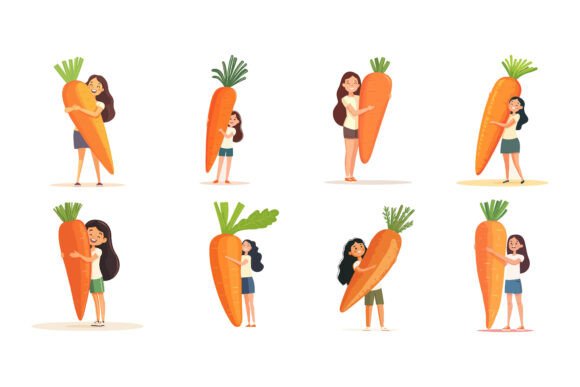
Orange Carrot Vegetables: Versatile Vector Illustrations
Fresh, crisp, and unmistakably vibrant—orange carrot vegetables bring a sense of warmth and natural energy to any visual project. Whether you’re crafting a farm-to-table menu, an educational infographic, or a playful social media post, the right illustration can anchor your message with clarity and charm. This special AI EPS collection makes it simple to access beautifully detailed carrot graphics that feel polished without losing that handcrafted appeal. It’s not just about adding a vegetable to a layout; it’s about giving your work an ingredient that communicates nourishment, harvest, or wholesome simplicity in a single glance.
What’s Inside the Orange Carrot Vegetables AI EPS Collection
You receive a thoughtfully composed set of files built to work immediately. The download includes AI and EPS formats for smooth vector editing, plus high-resolution JPG versions for rapid placement. Because the source files are cross-platform, designers on both Mac and Windows can open and use them without conversion headaches. Inside, everything is neatly organized—just a quick look at the layers panel reveals a logical structure that labels each element clearly. This means no hunting through flattened artwork or messy groups. The precision in the linework, curves, and shading reflects a commitment to perfection in detail, so your final designs look consistent whether they’re blown up for a banner or shrunk to a favicon.
Why Designers, Educators, and Marketers Choose This Set
The real advantage lives in how easy it is to make these carrots your own. Need to shift the orange from a deep autumnal hue to a brighter citrus tone? A few clicks adjust the fill color without touching the rest of the composition. Want to simplify a detailed illustration into a flat icon for an app button? The vector structure lets you strip back layers while keeping the silhouette clean. This flexibility matters when you’re juggling multiple brand guidelines or switching between print and digital. A small business owner can take the same carrot graphic from a product label to an email newsletter and maintain a unified look. An educator assembling a nutrition worksheet can recolor elements to match age-group preferences while keeping the educational value front and center.
Creative Projects That Shine with Carrot Graphics
The applications stretch far beyond the obvious. Food bloggers often grab these illustrations to elevate recipe cards—imagine a roasted carrot soup step-by-step where each ingredient appears as a crisp vector alongside the instruction. For publishers creating gardening magazines or children’s books, the file’s detail allows you to zoom in on a single carrot and retain that hand-drawn texture, making page layouts feel more tactile. Infographics gain visual rhythm when the same style repeats across related vegetable icons, and because this collection is so consistent, adding other veggie sets creates a balanced icon family. Even web developers find a place for them: a pull-to-refresh animation on a cooking app or a subtle hero image for a seasonal landing page. The files work equally well as symbols for presentations, standalone art for stickers, or part of a larger pattern design for textile or packaging mockups.
Customizing Your Carrot Illustrations for Maximum Impact
Start by identifying the emotional tone of your project. A sleek, minimalist app might call for a monoline outline with no fill, which you can achieve by isolating stroke layers and hiding the rest. For a rustic market poster, you might keep the full shading and add a subtle paper texture behind the graphic in your layout tool. The key is that every part of the illustration remains editable—no locked pixels force you into a single look. If you’re preparing a design for print, verify that your colors stay in CMYK mode after adjustment; the vector format handles this losslessly. For web use, quick exports in RGB from your editing software give you the crisp PNGs or SVGs you need. One practical trick: duplicate the carrot object, scale it down, and scatter a few smaller versions around a headline to guide the eye without overwhelming the message. That small touch transforms a basic layout into something memorable.
From Concept to Final Output: A Smooth Workflow
Time often gets lost repointing paths or cleaning up poorly made stock vectors. This collection skips that frustration entirely. Because layers are named and grouped logically, you can drag individual elements into your working document and immediately start building compositions. For an infographic about vitamin-rich foods, you might pull the carrot illustration alongside a set of related greens—then tint each to align with your data palette. The tidy structure also helps when multiple contributors work on the same brand kit: a freelancer handing off assets to a client can include brief notes about layer usage, and everyone stays on the same page. If you need to create variation, duplicate the artboard and play with color themes; you’ll have a suite of options ready for A/B testing in half the time.
Consistency doesn’t mean repetition. Each use of these orange carrot vegetables can feel fresh because the foundation remains so strong. Whether you’re building a seed packet design, an educational flashcard set, or a lively farmers’ market banner, the assets bend to your vision without sacrificing quality. The immediate availability of AI, EPS, and JPG files means you can start sketching out ideas the moment inspiration hits. So why wait? Add this resource to your creative toolkit and watch how a simple, beautifully crafted vegetable can transform the visual stories you tell.